As I mentioned in an earlier there was an annual National Poetry Month in the Pontiac event in Shawville, population 1600. Fun fact, unlike most municipalities in Quebec, it has no Catholic church. This is an area I’ve been researching for family history and I learned that thanks to a person in charge of handing out land grants who felt the way of peace was to keep Protestants and Catholics sequestered, no Catholics were allowed under his watch. And it held and holds for a couple hundred years. Anyhew,
Hursty’s at 368 Main Street was the venue this year but each year a different area of the municipality hosts. It was a friendly sports bar sort of spot. Look at the pure sky night from the parking lot.

We had room for chatting before the event kicked off. All kinds of craft chat. That was nice.That doesn’t happen organically over email the same.
Since then I posted a poem over at Patreon. (Is it annoying to come to one social to be sent off to another link? I swear I’m not handing you your hat. You can go to that link after.) I like giving poems a dry run. Ideally, share a poem with test reader, then a group, then submit individually to a journal, then to a chapbook, then to a book, then to a selected works in a few decades. Some poems skip a bunch of interim steps. Some rooms like this one invited that sort of thing.
I’ve been in rooms for readings with crossed arms and cross faces with a g’wan-impress-me-I-dare-you attitude. Those are daunting. There was none of that here. Mellow and breeze-shooting.
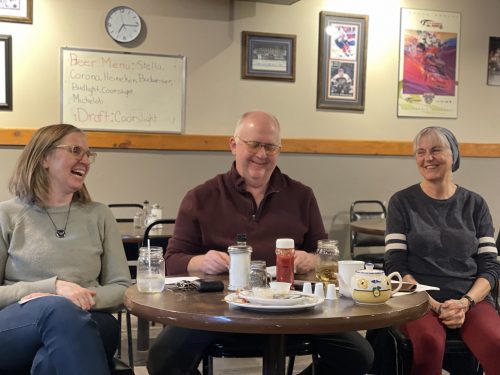
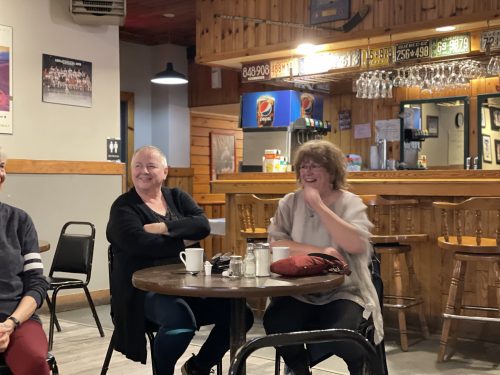
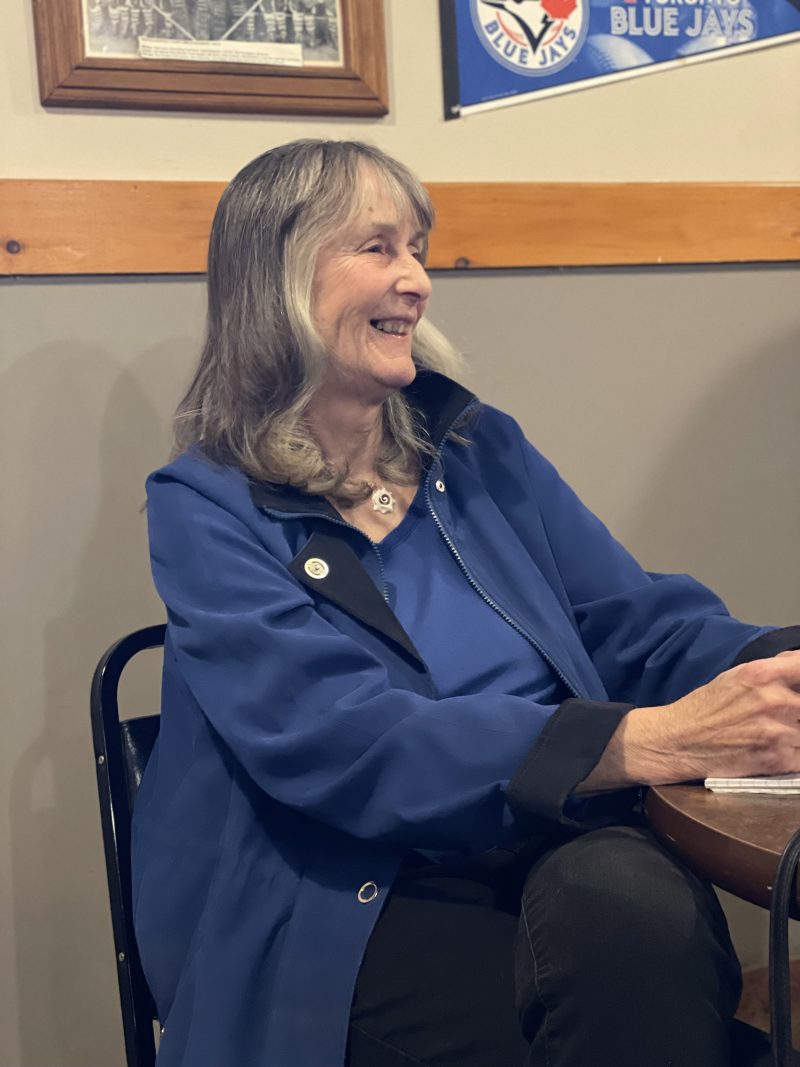
Cheryl, Tom and Earleen and people at another table of the 6. Dale Shutt, local artist, was in attendance as well (pictured below)
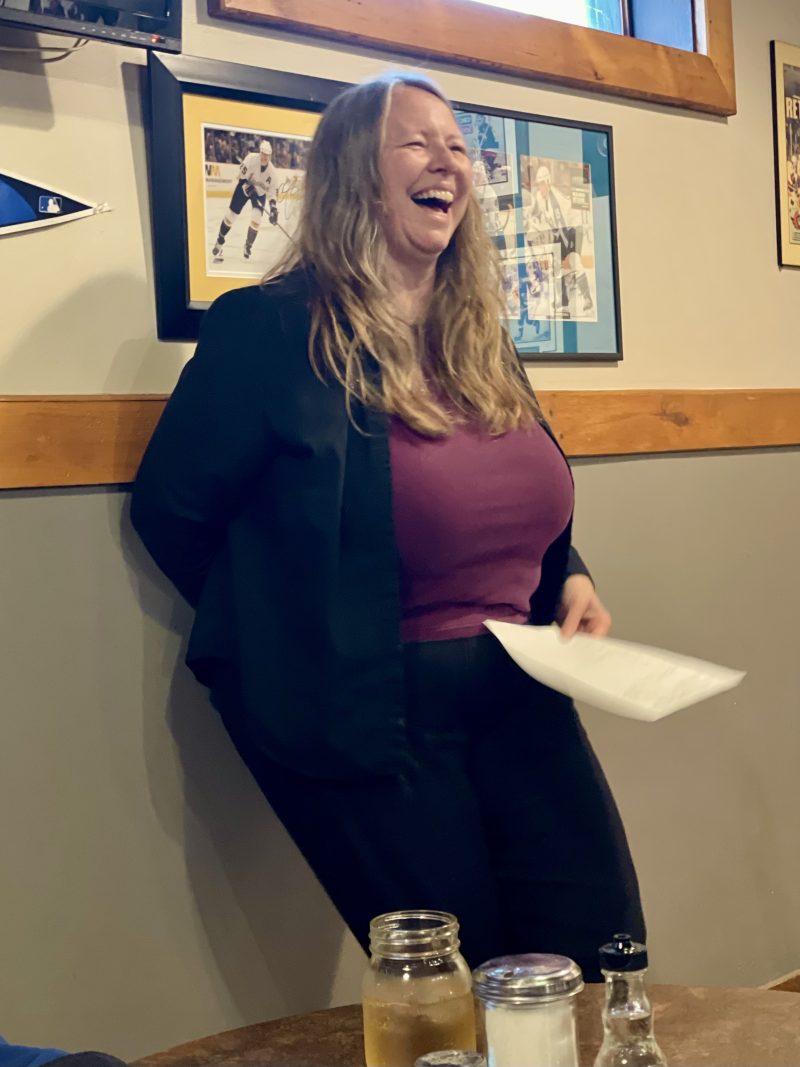
There was an open mic with host/organizer Jennifer Mulligan reading as well as Tom McCann and Earleen.
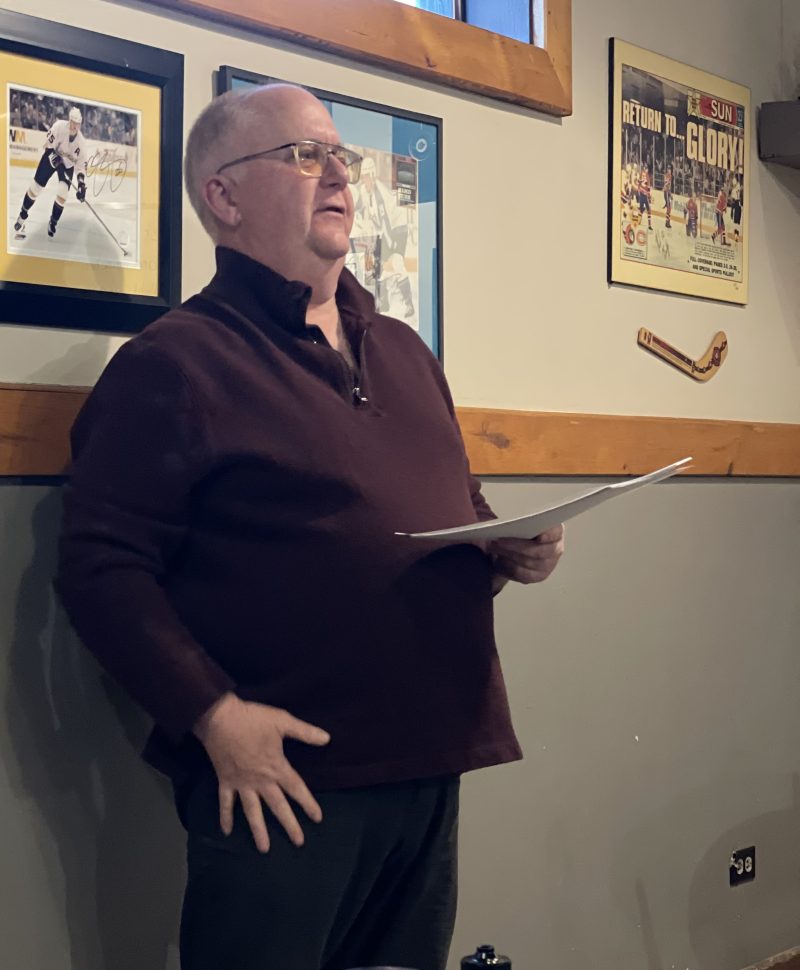
Tom McCann read several poems including some fab lines. I wasn’t there to make an archive of it, but my nature prevails. One of his poems considered what is worthwhile and what gives value to a life lived in the context of talking to an older man, asking himself, “could I plan a more heroic end than melting in a wheelchair?”
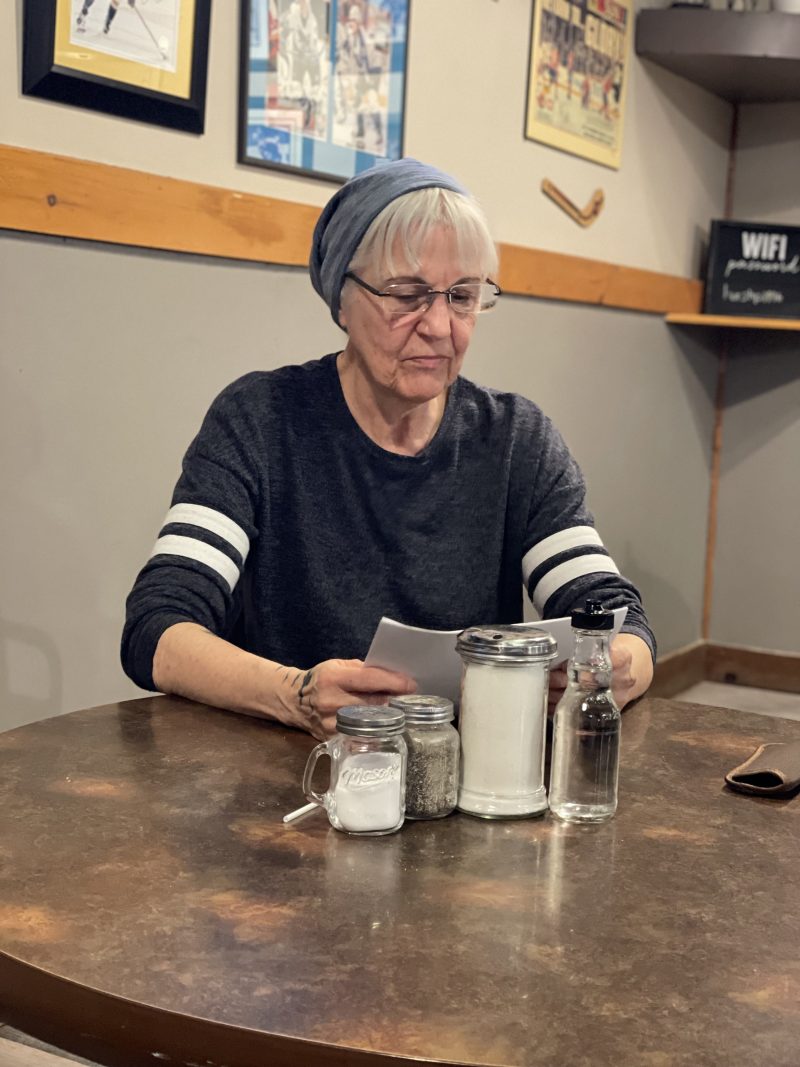
Earleen Devine (sp?) has some striking poems about her husband, with insightful turn of phrase about aging, “our bodies are designed to rot”. (It’s a feature.) She also wrote of “that vaulted space of sorrow.” Andy the time Jennifer read I was too keyed up to focus.
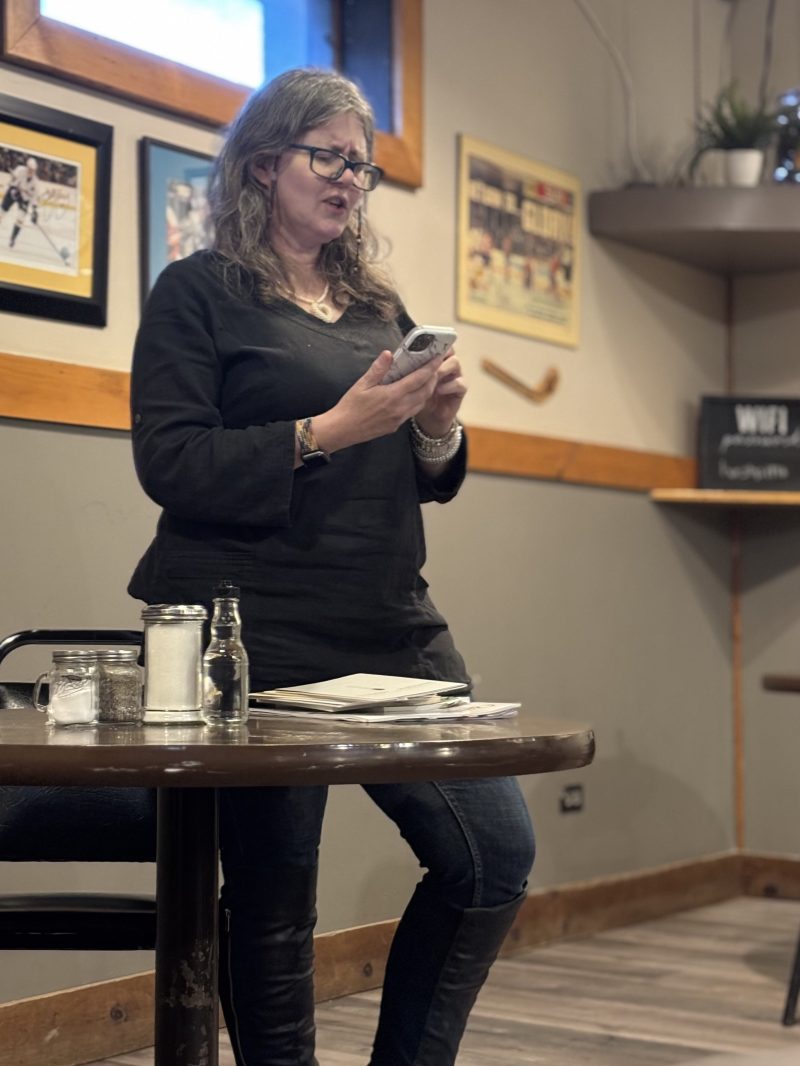
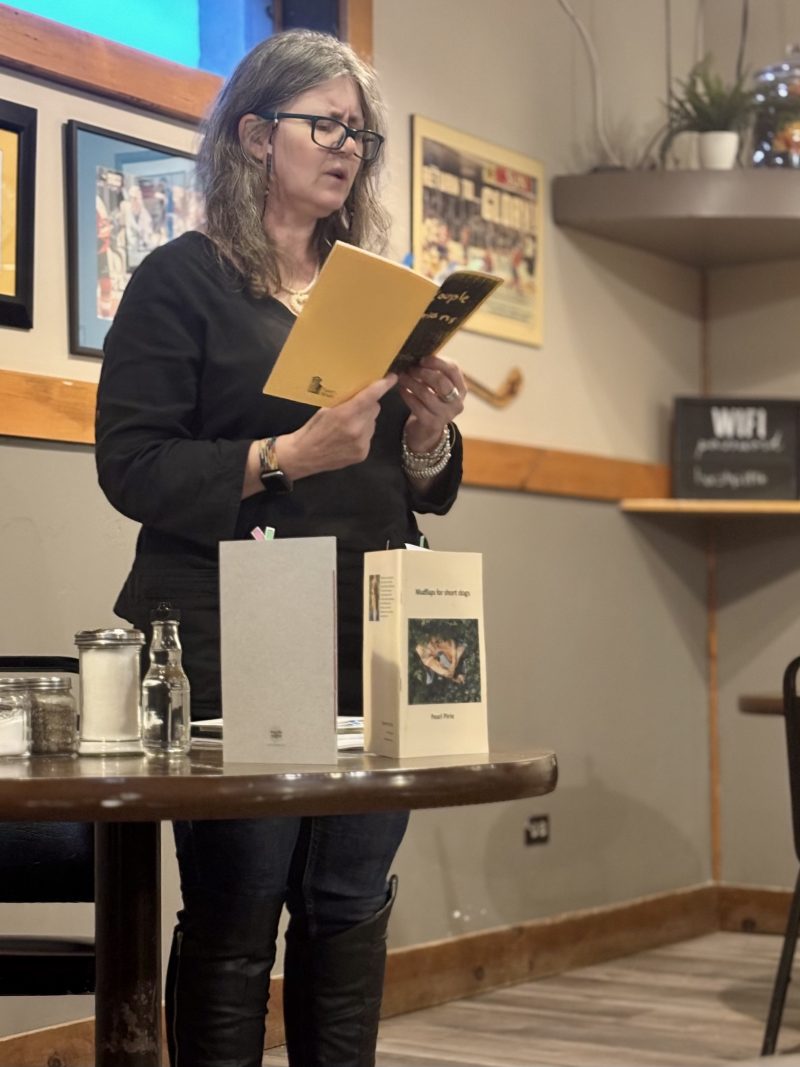
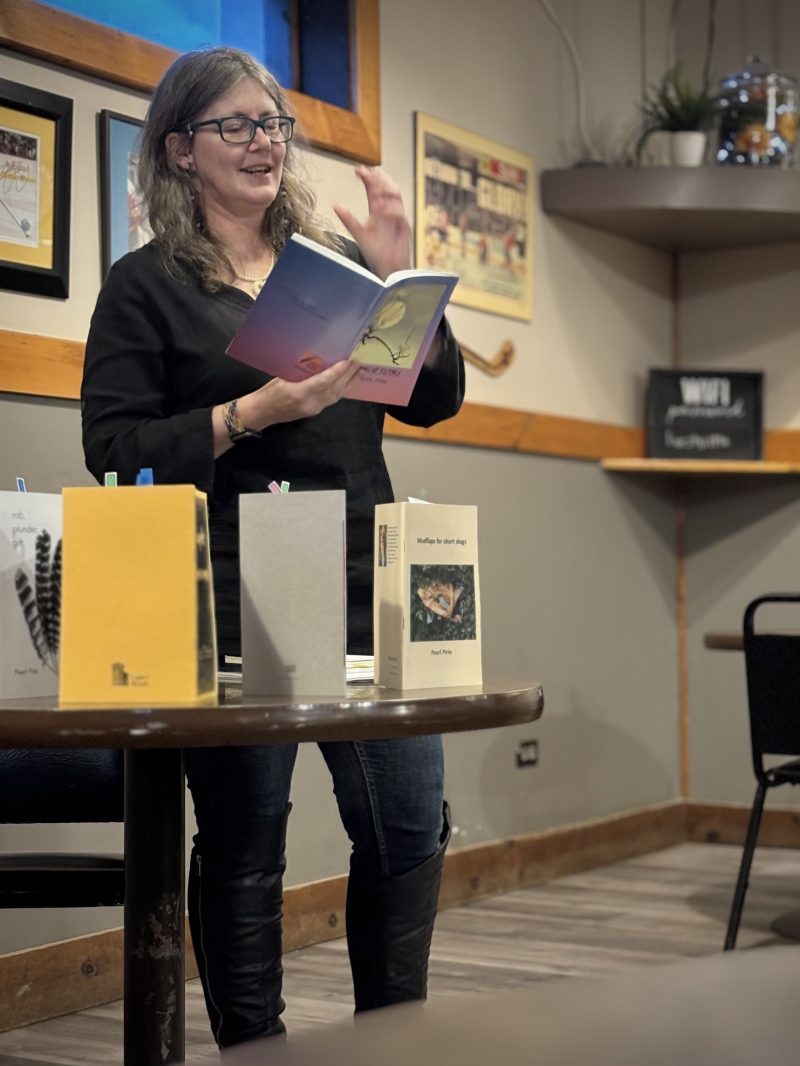
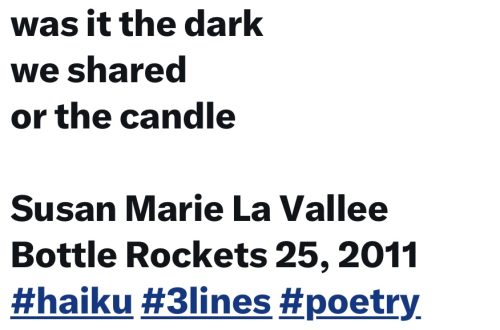
In the unusual position of not being on a tour, to tout a particular title, I could read anything so I did a scattershot of 10 years of titles, surreal to family history to haiku. To my surprise, the haiku sold best. We have the idea that only the tiniest sliver of a niche that is poetry of the niche that is creative writing would like haiku but there you go.
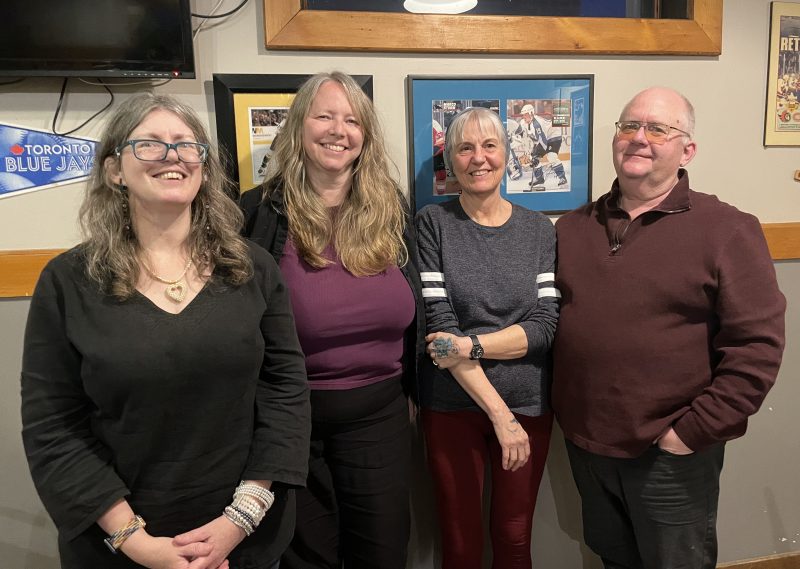
A group photo of the readers.
For more or for different, check out the next Pontiac Journal.